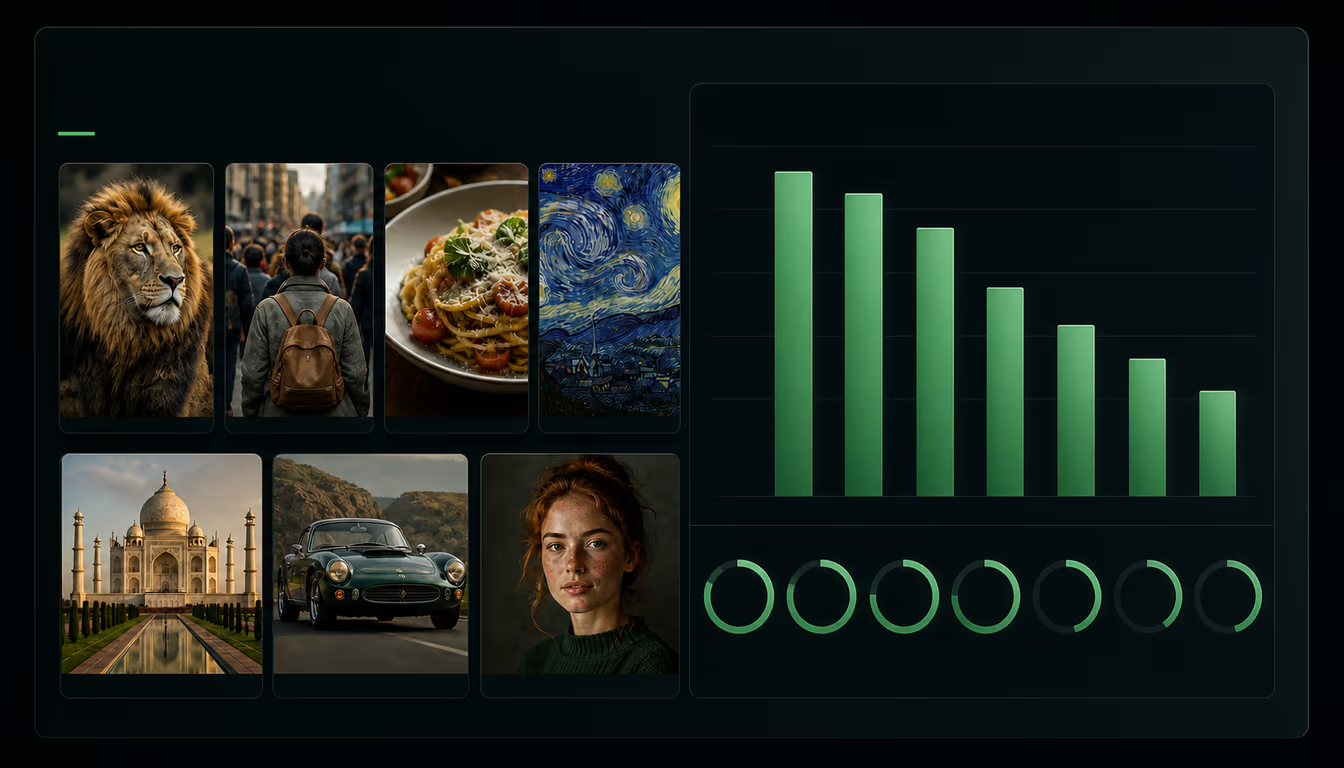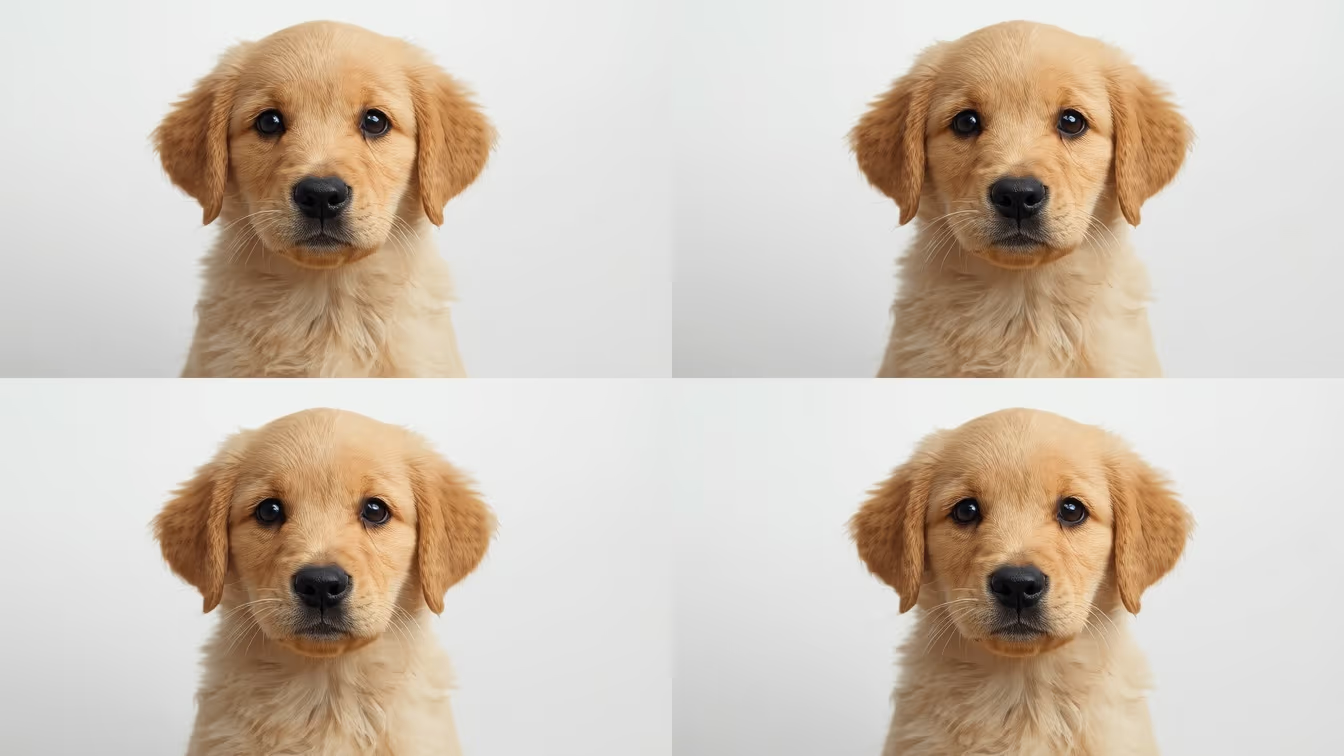
Every round of WhichOneIsReal asks you to find the authentic thing among convincing fakes — but what that looks like depends on the mode. In the image quizzes it’s four pictures with one real photograph. In the video quizzes it’s two short clips, one filmed and one generated. In the text quizzes it’s a set of quotes or headlines with a single genuine one hiding among AI-written imitations.
It looks simple from the outside. Behind each of those rounds, though, is a set of decisions about sourcing, generation and fairness that determine whether the quiz is actually testing your perception — or just tricking you. This is how it works, and why it’s built the way it is.
The one rule that governs everything
A detection quiz is only meaningful if the honest answer is genuinely “the real one,” for a genuine reason. It’s easy to build a quiz you can’t win — just pair a pristine studio photo against a deliberately degraded AI image, or vice-versa, and you’ve made a test of image quality, not authenticity. That teaches nothing.
So the rule we hold everything to is: every item in a round shows the same described scene. If the round is built around “a black dog catching a ball,” then every image shows a black dog catching a ball — one photographed, the rest generated. If it’s “a blonde woman smiling,” that’s what every option depicts. You’re never choosing between a dog and a landscape, or being nudged toward the answer because one picture happens to match the subject better than the others.
That matters because it removes every shortcut except the real one. The decision has to come down to how the image was made — not which one looks nicer, and not which one is obviously on-topic. When that’s true, getting the answer right actually means you saw something real, and getting it wrong actually means the model beat you.
Where the real photos come from
The authentic images are the anchor of the whole exercise, so they come from sources we can stand behind: free stock libraries such as Pixabay, Unsplash and Pexels, where the photographs are real camera captures released under licences that allow this kind of use. For a category like animals, that means real wildlife photography across a spread of species, poses and conditions — not just easy, well-lit portraits. For landmarks, it means genuine photographs of the actual buildings, which is what makes the “I’ve seen this a thousand times” trap work.
Using real, varied photography matters for a subtle reason: if every “real” image looked the same — always sharp, always centred, always studio-lit — you’d learn to pick the real one by its polish rather than by detecting the fakes. Variety in the real set forces you to actually discriminate.
How the fakes are made
The AI images are generated with current-generation tools — the same models people are actually using, not outdated ones that would make the quiz artificially easy. Across the image categories that’s models like DALL·E, Stable Diffusion, Google Imagen, Flux and others; on the video side it’s systems like Veo, Kling, Seedance and their peers.
We deliberately spread the fakes across multiple models rather than leaning on one. Different generators have different weaknesses — one struggles with reflections, another with fine texture, another with group scenes — and mixing them means you can’t win by learning the quirks of a single system. It also keeps the quiz honest as the field moves: when a new model raises the bar, it goes into the rotation.
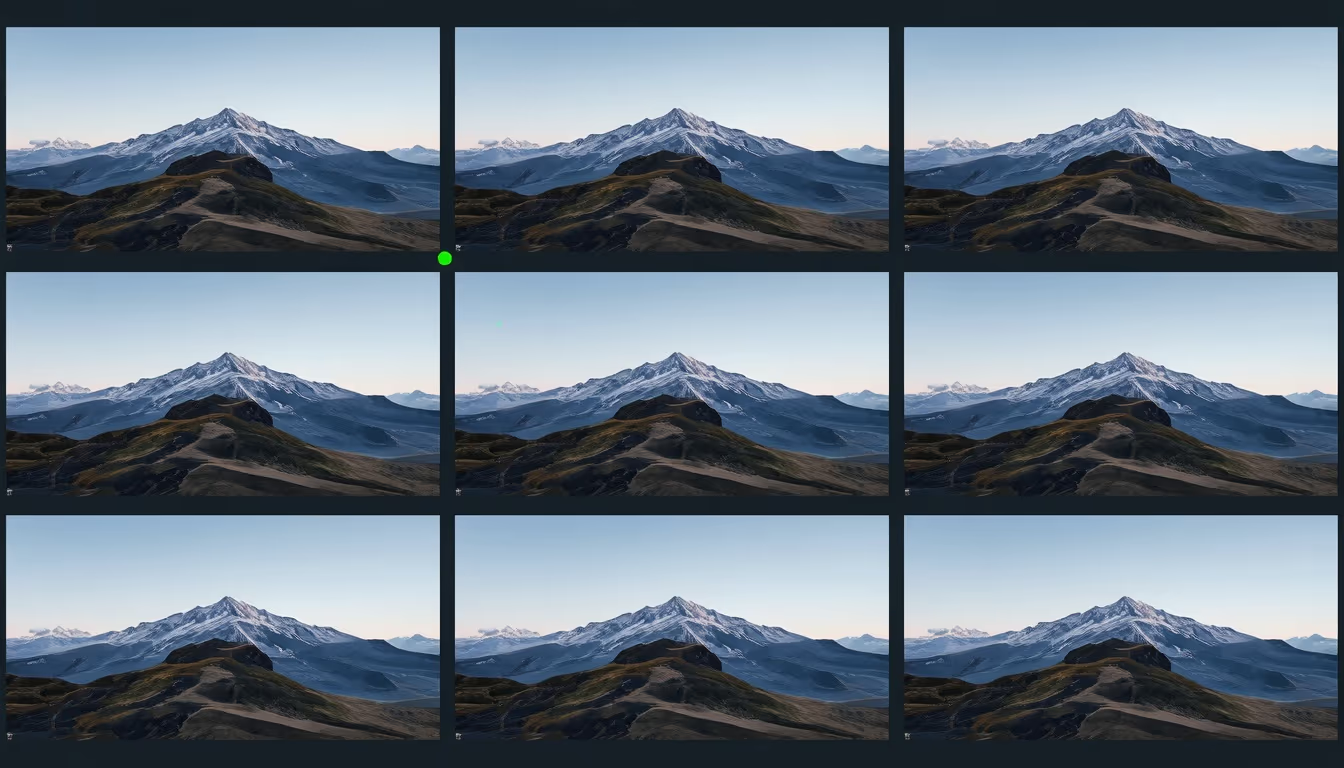
In several categories you can switch on “show model names,” which reveals which system generated each fake after you answer. That turns a guessing game into a learning tool: over a few rounds you start to recognise how each model handles a subject differently.
In most modes you can also see the prompt the round was built from — the actual text description every image in that line-up was generated against. That’s deliberate: it shows you there was no sleight of hand in the subject matter, and it makes the comparison concrete. Once you know every image was answering “a black dog catching a ball,” the only remaining question is which one a camera actually took.
Keeping rounds fair
A few principles keep individual rounds from being cheap shots:
- Matched subjects. A round about a Margherita pizza is four Margherita pizzas — not a pizza against a salad. The decision has to come down to authenticity, not “which one is the food I was asked about.”
- No degraded bait. We don’t win by making the AI image obviously low-resolution or the real one obviously flawless. Comparable quality on both sides.
- Honest labels. The real image is really real, and the fakes are really synthetic. That sounds obvious, but a surprising number of “AI or not” tests online mislabel stock photos or use AI images as their “real” control. If we get one wrong, we want to hear about it — there’s a contact page for exactly that.
- Current, not nostalgic. The point is to test you against what exists now. Retiring old, easy fakes and adding harder ones is a permanent part of the maintenance.
Why a game, and not just an article
We publish written guides too — on detecting AI images, on deepfakes, on the vocabulary of the field. But reading about tells and using them are different skills, and the gap between them is exactly where a game earns its place.
Detection is a perceptual skill, and perceptual skills improve through feedback, not theory. You can memorise “check the reflections” and still miss a broken reflection in the moment, because knowing the rule isn’t the same as having trained your eye to fire on it automatically. A quiz that shows you the answer immediately after each guess closes that loop: you commit, you find out, you adjust. Do that a few dozen times and the checklist stops being something you recite and becomes something you notice.
That’s the whole design goal. Not to frighten anyone about AI, and not to sell a false promise that you’ll catch every fake — you won’t, and honestly nobody can as the models keep improving. In fact, a good number of the tells people still repeat have already stopped working. The aim is narrower and more achievable: to move your intuition from “no idea” to “meaningfully better than chance,” using the fastest method we know, which is deliberate practice against real examples.
If you want to see where your eye currently stands, start with the mixed quiz — and if you spot a round you think is unfair, tell us. Keeping it fair is the entire point.