There are two unhelpful ways to talk about AI-generated images. One is breathless panic — the idea that we can no longer believe anything we see, that every photo is now suspect, that reality itself is broken. The other is dismissive shrug — it’s just a fun toy, people have faked photos since Photoshop, nothing to see here.
Both are wrong, and in the same way: they treat “AI images” as one undifferentiated thing. In reality, synthetic media causes serious harm in a few specific places and almost none in most others. Knowing the difference is what turns anxiety into something useful. So here’s an attempt at a sober map.
Where it genuinely does damage
Scams and fraud
This is the clearest, least debatable harm. AI images and video make fraud cheaper and more convincing at scale:
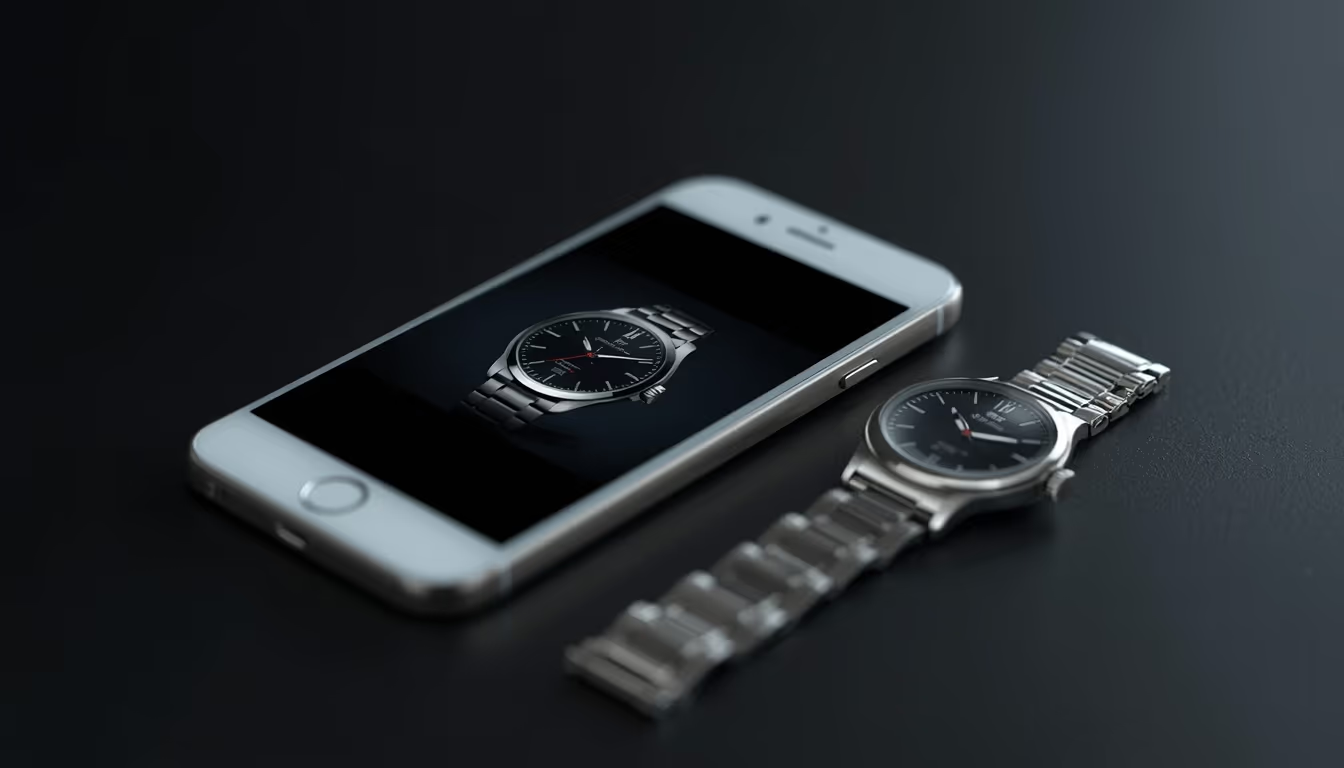
- Fake product listings and reviews. A marketplace seller can generate flawless photos of a product that doesn’t exist, or that looks nothing like what ships. Review sections fill with AI-written praise attached to AI-generated “customer photos.”
- Romance and investment scams. A convincing face and a few generated “life” photos are enough to build a fake person. Video generation now extends this to short clips, which defeats the old advice to “ask them to turn their head on a video call.”
- Fake documentation. Generated screenshots, receipts, and “proof” images grease everything from refund fraud to disinformation.
The common thread is that these attacks don’t need to fool an expert studying the image. They need to fool a busy person glancing at a phone for two seconds. That’s a much lower bar, and it’s already being cleared routinely. The US Federal Trade Commission’s consumer advice on romance and imposter scams is worth reading if you want the current playbook — the images are only the surface layer of these schemes.
Non-consensual and abusive imagery
The most serious harm, full stop. The same tools that make a fun quiz possible also make it trivial to generate abusive images of real people, including minors, and to create non-consensual intimate imagery of ordinary individuals — not just celebrities. This is not a “misinformation” problem to be debated; it’s a direct harm to specific victims, and it’s the area where regulation and platform enforcement matter most. No amount of “train your eye” helps here, because the harm is in the creation and distribution, not in whether a viewer can tell it’s fake.
Targeted misinformation at the right moment
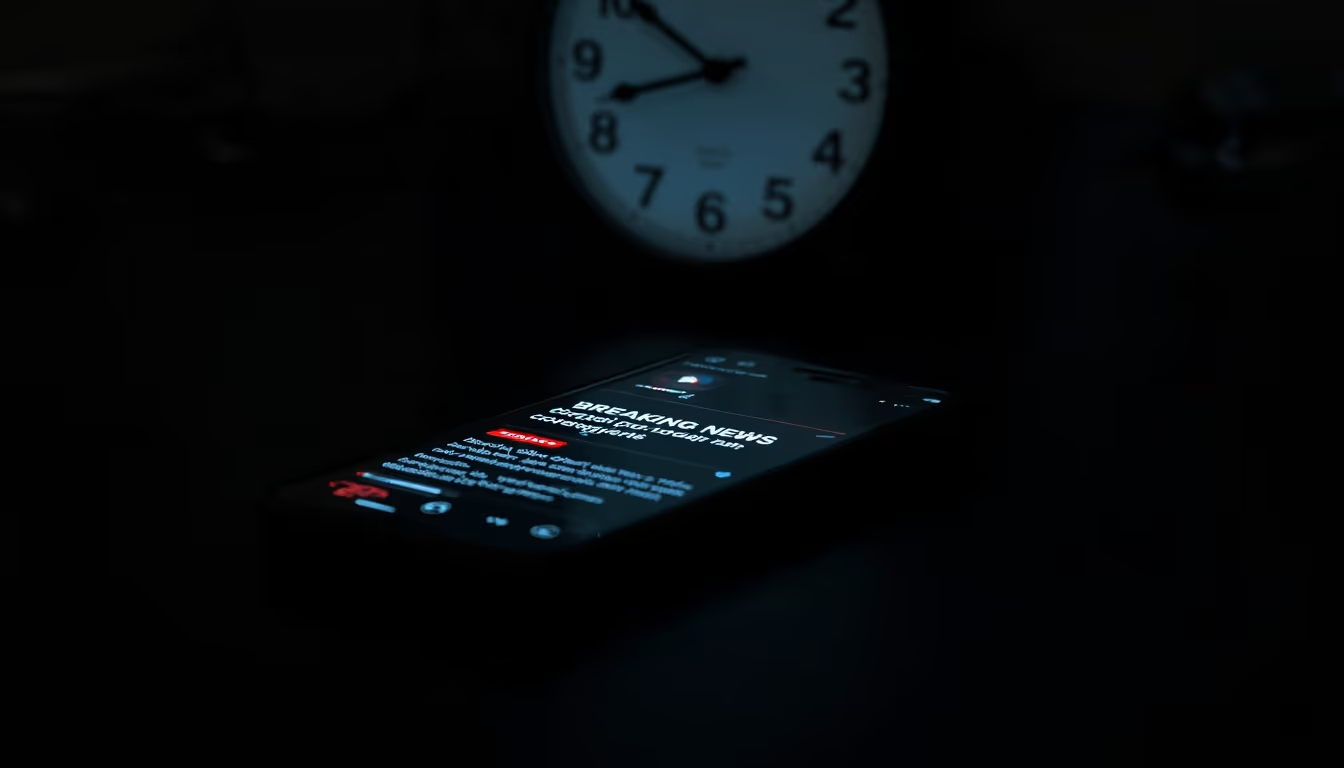
The fear of AI images swinging entire elections has, so far, been overstated — but that doesn’t mean the risk is zero. The realistic danger isn’t a single viral fake that fools a nation. It’s a well-timed local fake: a fabricated image of a polling place closure, a staged “incident” released hours before a vote, a fake photo of a product recall or a bank in trouble. These work not because they’re undetectable, but because they spread faster than they can be checked, and the correction never catches up to the original.
Where the panic is overblown
Everyday social media
Most AI images you scroll past cause no harm at all. A surreal landscape, a stylised portrait, an obviously fantastical scene — these are the digital equivalent of illustration. The presence of synthetic images in your feed is not, by itself, a crisis, any more than the existence of Photoshop meant every magazine cover was a lie. The problem was never images that look edited; it’s images that are presented as evidence of something that didn’t happen. When low-value synthetic posts are produced and repeated mainly to harvest reactions, that is the more specific problem described in our guide to AI slop and why it spreads on Facebook.
”We can never trust a photo again”
This claim proves too much. We never could fully trust a photo — staging, selective framing, and misleading captions long predate AI. What’s actually changed is the cost of a convincing fake, which has fallen to near zero. That’s a real shift, but the response isn’t despair; it’s the same media literacy that was always sensible: consider the source, look for corroboration, be suspicious of images with no provenance that arrive perfectly timed to make you feel something.
The image itself as the whole story
A lot of coverage treats detection as a purely visual problem — can you spot the fake pixels? Increasingly, that’s the wrong frame. As models improve, the important question shifts from “does this image contain artifacts?” to “where did this image come from, and does anything corroborate it?” A perfectly rendered fake with no source is far more suspicious than a slightly-off image from a known photographer.
This is exactly why provenance standards like C2PA content credentials matter more than any checklist of visual tells — and why many of the old giveaways have stopped working altogether.
So what actually helps
For the harms that are real, the responses are boringly practical:
- For scams: slow down. The images are designed to be judged in a glance, so the single best defence is to not judge in a glance. Verify sellers, reverse-image-search profile photos, and treat unsolicited “proof” images as unproven by default.
- For abuse imagery: this is a platform and policy problem, and the useful action is supporting reporting mechanisms and laws that target creation and distribution.
- For misinformation: check provenance before sharing, and be most skeptical of images that are perfectly timed and emotionally loaded. The correction rarely travels as far as the original, so the leverage is in not amplifying it in the first place.
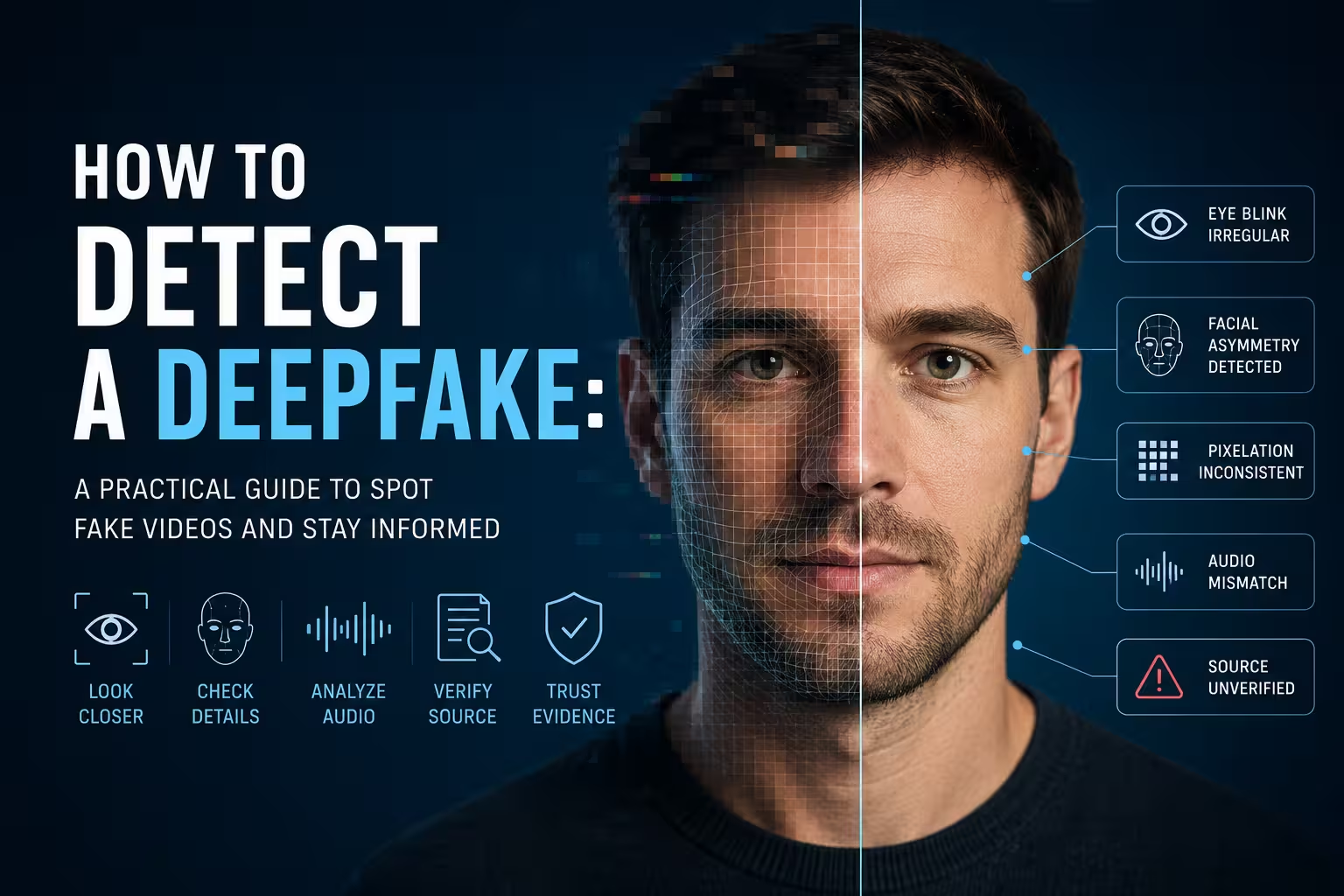
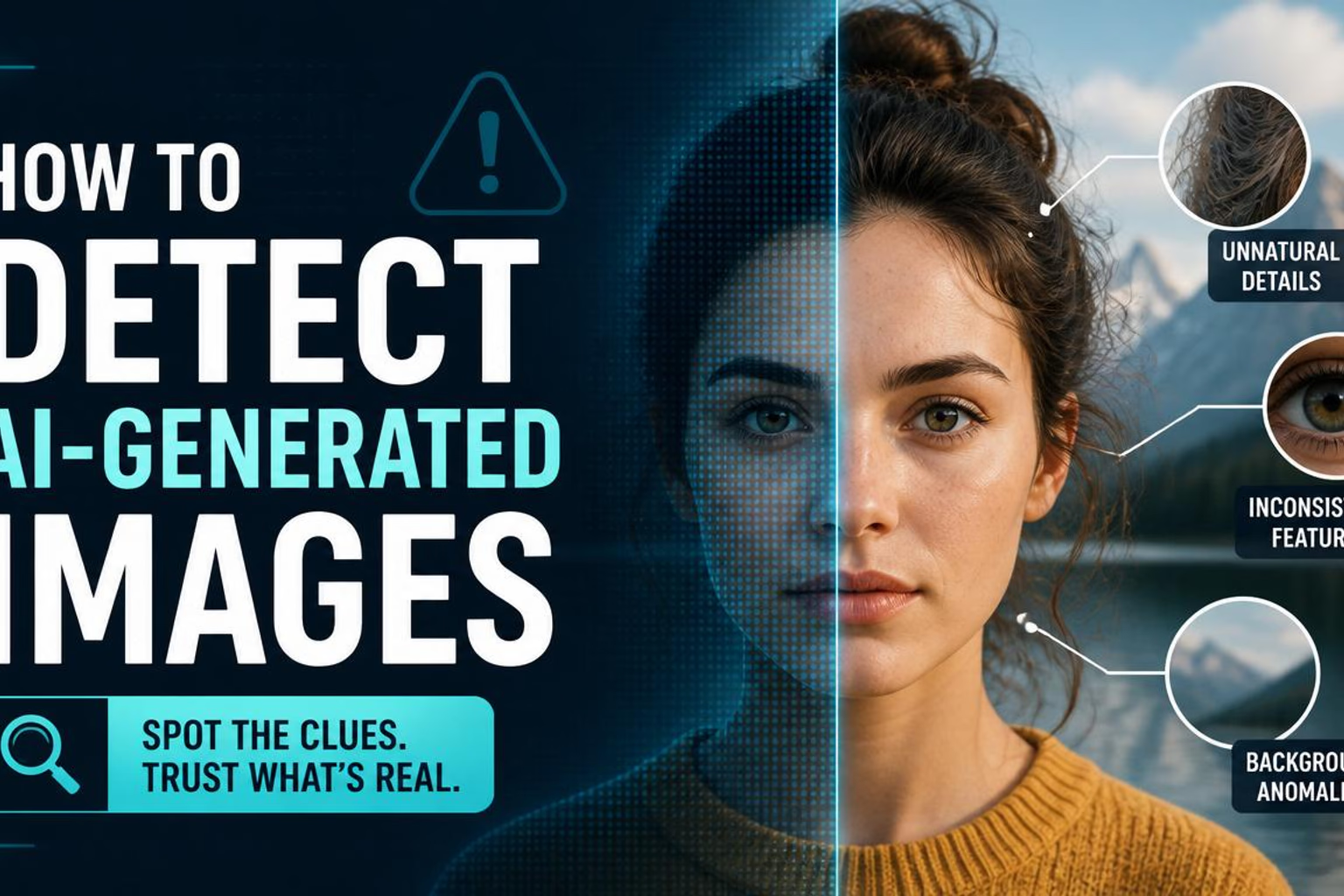
And underlying all of it: a calibrated eye still helps. Not because you’ll catch every fake — you won’t, and that gap widens every year — but because knowing roughly how good these models are, and where they still slip, keeps you from both extremes. You neither trust everything nor panic about everything. If you’ve never actually tested your intuition against current models, it’s worth doing; our guide to detecting AI images covers the durable tells, and the deepfake detection guide covers video.
The goal isn’t to make you paranoid. It’s to make you appropriately, specifically skeptical — suspicious in the few places it counts, and relaxed everywhere else.
Curious how good you’d be at the glance-test that scammers rely on? Try the quiz and find out.