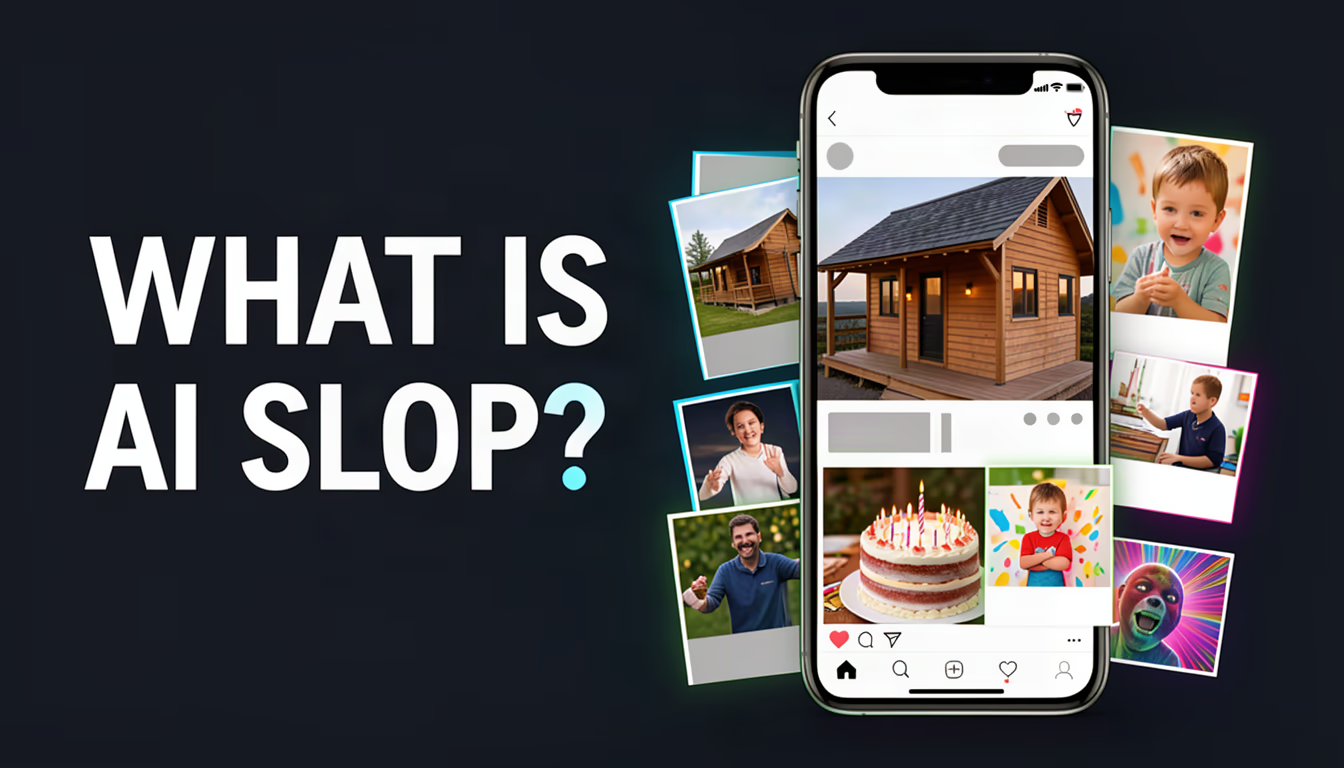
AI slop is mass-produced, low-value content made with generative AI and published to capture attention at scale. It is the synthetic cousin of clickbait and content farming: cheap to make, easy to repeat, and optimized for reactions rather than accuracy or usefulness.
That definition matters because AI-generated and slop are not synonyms. A carefully directed illustration, openly labelled and edited by a person, is not automatically slop. A Page that publishes dozens of near-identical miracle cabins, heroic children, impossible animals or invented rescue scenes to harvest comments probably is.
The useful question is therefore not only, “Was AI involved?” It is also: Who made this, why was it posted, and what happens after I react?
What does “AI slop” mean?
The word combines two judgments: the content is made with AI, and it offers little value to the person seeing it. Typical AI slop is disposable. It does not need to remain credible for long; it only needs to stop a thumb, trigger a reaction and earn another recommendation.
Most examples share several traits:
- Produced at volume. One operator can generate many variants of the same idea in minutes.
- Emotionally blunt. Pride, pity, outrage, nostalgia and wonder work without much context.
- Thin on sources. There is no photographer, location, original report or verifiable event behind the post.
- Built around engagement. Captions ask for a birthday wish, a prayer, a rating or a comment.
- Easy to recycle. The same image or prompt pattern can appear across many Pages with small changes.
- Monetizable. Attention can be converted into followers, ad impressions, off-platform visits, personal information or sales.
A post does not need all six traits to qualify. The pattern is more important than one odd hand or a melted background.
Why does AI slop flood Facebook?
Because generation is cheap and distribution rewards attention.
Before image generators, a content farm still needed photographs, illustrations or stolen material. Generative AI removes much of that bottleneck. An operator can ask for fifty sentimental images, keep the five most striking ones and publish them across a network of Pages. If one theme performs well, it can be repeated with new faces, animals, locations and captions.
Facebook does not show people only posts from friends and Pages they follow. Its Feed also recommends public content that its ranking systems predict a person may find relevant. That can help an original creator reach a new audience, but it also creates an opening for accounts that optimize relentlessly for reactions.
A peer-reviewed 2024 study in the Harvard Kennedy School Misinformation Review examined 125 Facebook Pages that had posted at least 50 AI-generated images each. The researchers found spam, scam and other high-volume creator Pages using synthetic images to build audiences. Some directed users to low-quality websites; others promoted nonexistent products or sought personal details. The study also documented Facebook recommending some of those images to people who did not follow the posting Pages.
This is not proof that every strange recommended image belongs to a coordinated scam. It does show why the format is attractive: visually sensational content can travel beyond an existing audience, while the cost of producing another variation is close to zero.
What AI slop looks like
There is no single slop aesthetic, but several recurring formats make the economics visible.
Sentimental achievement bait
A child presents an elaborate painting, cake or wooden sculpture. The caption says nobody appreciated the work, asks for a birthday wish or invites readers to rate it. The image exists to turn kindness into comments.
The child, object and story may all be invented. What matters to the operator is that the emotional request is understandable before the viewer checks the details.
Impossible homes and fantasy craftsmanship
Cabins, tree houses, furniture and gardens are rendered with cinematic lighting and impossible construction. These posts often invite users to say whether they would live there or to praise the supposed builder.
Unlike an honest concept-art account, the Page may present every image as a real achievement while providing no architect, location, build process or source.
Miracle rescues and heroic animals
A dog saves a child. A wild animal appears to ask a human for help. A rescue scene is framed as phone footage but has no local report, organization or follow-up.
These images exploit a good instinct—the desire to reward courage or care. Before sharing, look for an identifiable rescue group and independent reporting. A moving picture is not evidence that the event happened.
Nostalgia that never existed
Synthetic village scenes, “rare historical photographs” that were generated in the present and idealized childhood memories attract comments because they feel familiar. The details may be plausible individually while the event, place or decade is invented.
This category is especially slippery because an image can feel emotionally true while making a false documentary claim.
Celebrity, product and giveaway bait
A familiar face appears to endorse a product, a luxury item is supposedly being given away, or a perfect customer photo supports an unknown shop. Here the slop pipeline can lead directly into impersonation, affiliate spam or fraud.
If money, login details or personal information enter the picture, stop treating the post as entertainment and verify the offer outside the post.
AI slop is not the same as AI art, spam or deepfakes
These labels overlap, but they answer different questions.
- AI-generated content describes how something was made.
- AI art usually describes a creative work or practice. People can debate its authorship or merit without calling every example slop.
- Slop describes low-value, disposable output and the incentive to produce it at scale.
- Spam describes distribution behavior: repetition, manipulation, irrelevant captions, coordinated accounts or unwanted promotion.
- Misinformation describes a false or misleading claim, whether AI was used or not.
- A deepfake manipulates the likeness or voice of a real person. Our separate deepfake guide covers face boundaries, lip sync and temporal artifacts.
One post can sit in several categories. A synthetic celebrity endorsement shared by a network of repetitive Pages may be AI-generated content, slop, spam, misinformation and a deepfake at the same time. A labelled fantasy landscape posted by its creator may be AI-generated art without being any of the others.
How to judge a suspicious post without becoming paranoid
Do not begin by zooming into fingers. Begin with the account, claim and source.
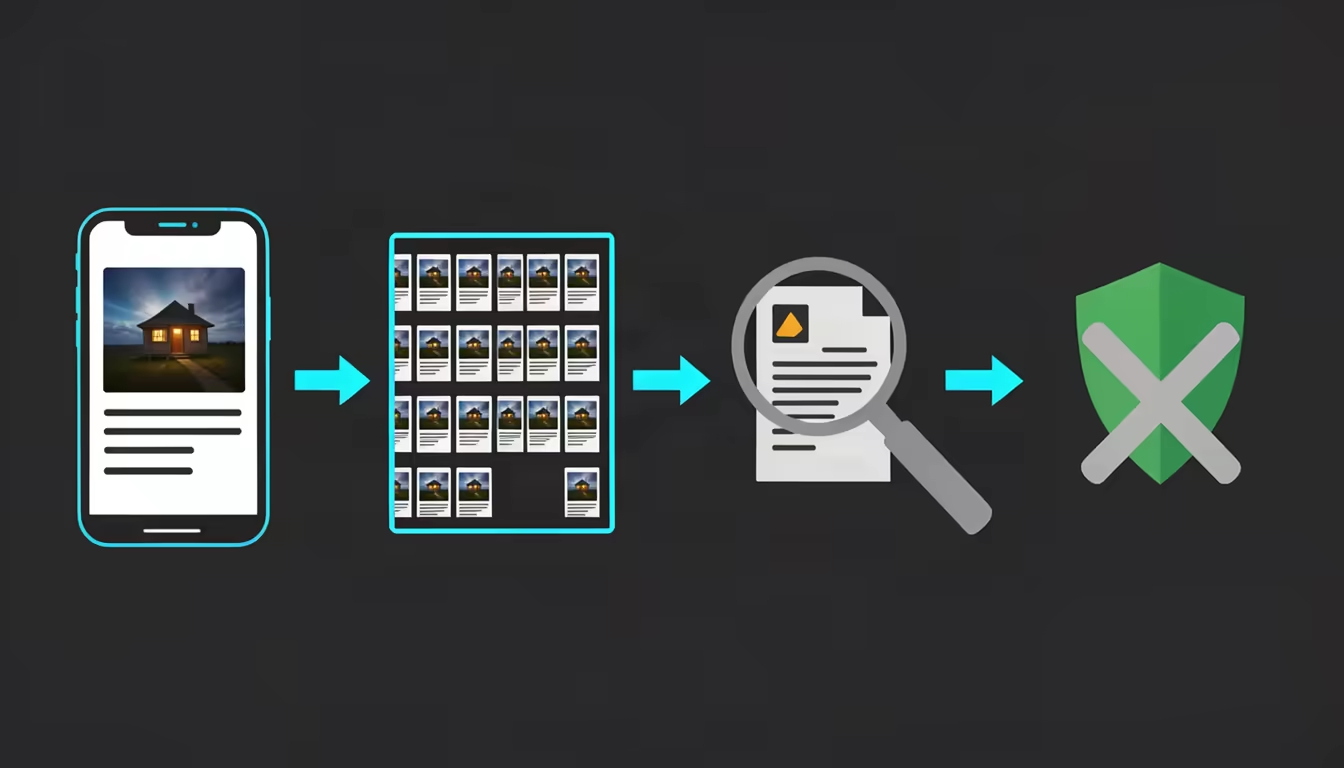
1. Read the Page, not just the post
Open the Page and scan its recent history. Does it publish many variations of the same emotional scene? Do unrelated locations and people appear under identical captions? Is there a real organization, creator or subject behind the account?
A single polished image tells you little. A factory-like posting pattern tells you much more.
2. Ask what the caption is trying to make you do
“Wish him a happy birthday.” “Nobody appreciates her work.” “Would you live here?” These prompts are not evidence of AI, but they explain the post’s job: convert emotion into measurable engagement.
Be more cautious when the caption makes a factual claim yet provides no names, date, location or source.
3. Find the earliest credible source
Search for the event, person or organization independently. A reverse-image search may reveal older versions, different captions or a generator gallery. For a rescue, disaster or public figure, look for reporting or an official account outside the Page that posted it.
No result does not prove the image is synthetic. It means the claim remains unsupported.
4. Inspect the image—but do not stop there
Visual inconsistencies can still help: repeated objects, impossible contact points, conflicting reflections or geometry that changes across the scene. Our AI-image detection guide shows where to look, while the tells that stopped working explains why clean hands and readable short text no longer prove a picture is real.
A visually flawless image can still carry a false caption. A strange-looking real photograph can still be authentic. Pixels are one part of verification, not the verdict.
5. Treat labels and provenance as one-way evidence
A valid Content Credential or detectable watermark can provide useful positive evidence about how a file was made. Missing metadata or a missing label proves very little because screenshots, downloads and platform processing can disconnect provenance. Our SynthID and Content Credentials guide explains that limitation in detail.
6. Do not reward the uncertainty
If a post appears engineered for engagement and you cannot verify its claim, do not comment merely to call it fake. A hostile comment is still engagement. Avoid clicking unfamiliar links, sharing the post or supplying personal information. Report clear impersonation, fraud or coordinated spam through the platform’s tools.
What is Facebook doing about spammy content?
Meta has publicly acknowledged that accounts try to game Facebook’s distribution and monetization systems. In an April 2025 enforcement announcement, the company said it would reduce reach and monetization for tactics including unrelated captions, excessive hashtags, networks that repeat the same content and coordinated fake engagement.
That announcement is about spam behavior rather than a blanket ban on AI-generated images. The distinction is sensible: origin alone does not determine quality, honesty or harm. An openly labelled illustration and a deceptive scam post should not be treated as the same thing merely because both used an image model.
Enforcement also does not remove the need for judgment. Labels can be absent or wrong, policies change, and content can move between platforms faster than any moderation system can respond.
The practical definition to remember
AI slop is not “anything made with AI that I dislike.” It is cheap, repetitive synthetic content produced with little concern for accuracy or value, then pushed at scale because attention can be monetized.
That definition keeps the criticism focused on the real problem: not a tool in isolation, but a production and distribution system. It also avoids the opposite mistake of treating every polished synthetic post as harmless. When the source is missing, the emotion is doing all the work and the account behaves like a factory, slow down before you feed it another reaction.
Frequently asked questions
What does AI slop mean?
AI slop is low-value content produced with generative AI at high volume, usually to capture attention, engagement, ad revenue, followers or leads. The term describes both the poor editorial value of the output and the system that rewards making it cheaply at scale.
Is every AI-generated image AI slop?
No. An AI-assisted illustration can involve clear intent, editing, disclosure and genuine creative work. Slop is normally repetitive, disposable, misleading or mass-produced with little concern for accuracy or usefulness.
Why is there so much AI slop on Facebook?
AI makes attention-grabbing images cheap to produce, while recommendation systems can expose engaging public posts beyond a Page’s followers. Together, those systems reward operators who test emotional themes repeatedly and convert attention into followers, advertising, off-platform traffic or scams.
Is AI slop the same as a deepfake?
No. A deepfake impersonates or alters a real person, often through a face swap or synthetic voice. AI slop is a broader label for mass-produced low-value AI content. A deepfake can be slop, but most slop does not need to impersonate anyone.
How should I respond to a suspicious Facebook post?
Do not share or click immediately. Check who posted it, look for an original source, search for earlier copies, inspect whether the caption matches the image and verify factual claims independently. Report clear scams or impersonation through Facebook’s reporting tools.
Sources and update policy
This article distinguishes durable concepts from platform-specific behavior. Facebook’s recommendation and enforcement systems can change; those sections were checked on 20 August 2026 and should be reviewed against current Meta documentation when the policy changes.
- DiResta & Goldstein: How spammers and scammers leverage AI-generated images on Facebook for audience growth — peer-reviewed study, 2024
- Meta: Cracking Down on Spammy Content on Facebook — platform enforcement announcement, 2025
- Meta Transparency Center: How Facebook Feed Recommendations work — official description of recommendation signals for suggested content