
Same Prompt. 21 AI Models.
We gave every major AI image model the exact same prompt and collected the results. Compare outputs side by side and see how each model interprets style, detail, and realism differently.
These are the same models you encounter in the image quiz.
Side-by-side comparison
Choose a prompt below, then see how all models responded to the same input.
A cat curled up asleep on an open book, next to it a steaming cup of tea, cozy living room atmosphere.






















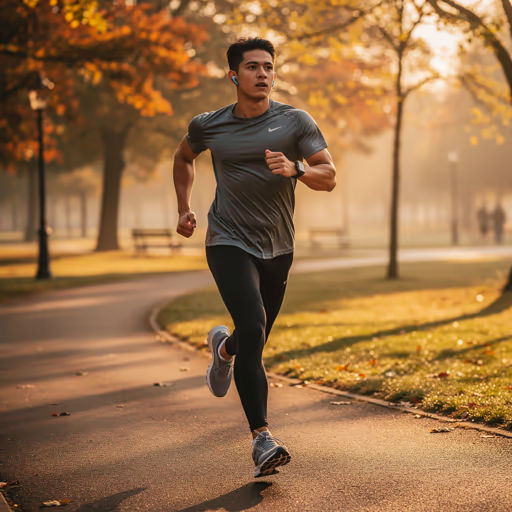




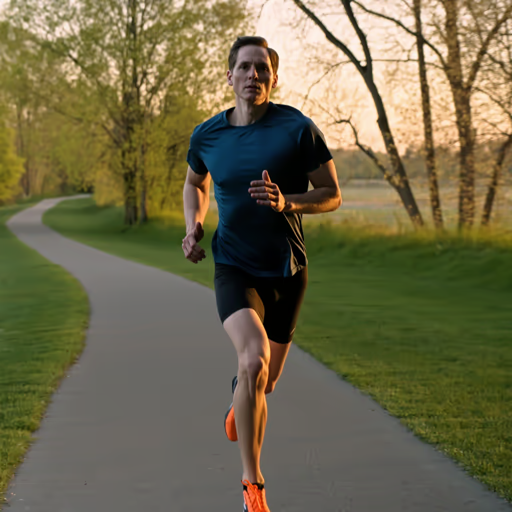
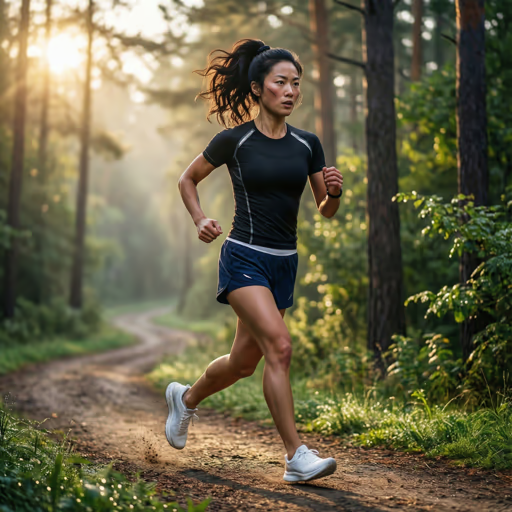


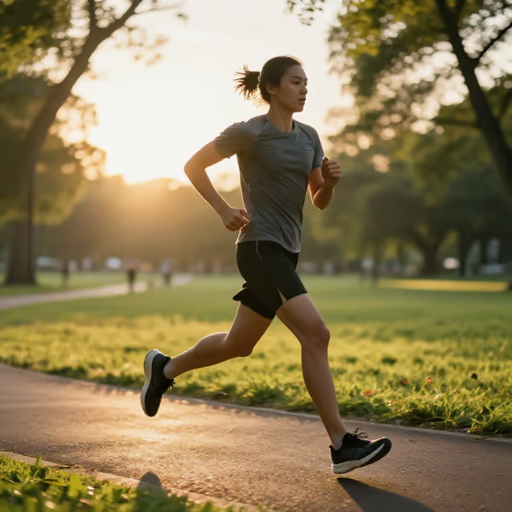
⭐ Big Players

DALL-E 3
OpenAI's widely adopted image model, integrated into ChatGPT and Microsoft products. Excels at following complex text instructions and generating photorealistic scenes. Its images often have a slightly 'polished' look — almost too perfect.
More about OpenAI →
Stable Diffusion 1.5
The open-source model that democratized AI image generation. Because it's fully open, hundreds of fine-tuned versions exist. Quality varies widely — some versions rival top proprietary models, others show clear artifacts especially in hands and faces.
More about Stability AI →FLUX.2 Max
The premium tier of Black Forest Labs' FLUX.2 series. Maximum quality variant with improved photorealism, superior facial detail, accurate anatomy, and enhanced text rendering — pushing the FLUX architecture to its current ceiling.
More about Black Forest Labs →
Nano Banana Pro
Google's Gemini 3 Pro Image (codename: Nano Banana Pro) is a 2025 image generation and editing model built on the Gemini 3 architecture. A step up from Gemini 2.5 Flash Image (codename: Nano Banana), it is designed for professional design workflows — combining high-fidelity image synthesis with precise instruction-following for complex editing tasks.
More about Google →More Models
GPT Image 1.5
OpenAI's next-generation image model, succeeding DALL-E 3. Dramatically improved text rendering within images, more reliable instruction following, and stronger photorealism. Deeply integrated into ChatGPT and the OpenAI API.
More about OpenAI → Imagen 4
Google DeepMind's fourth-generation text-to-image model. Substantially improved photorealism, fine-grained detail, and text accuracy over previous versions. Particularly strong in landscape photography, architecture, and product visualization.
More about Google → Stable Diffusion 3.5 Large Turbo
A fast, distilled variant of Stability AI's SD 3.5 architecture. Generates high-quality images in fewer sampling steps without sacrificing significant quality. Improved typography, compositional understanding, and human anatomy over SD 2.x.
More about Stability AI →Seedream 4.5
ByteDance's image generation model, marketed under the BytePlus enterprise brand. Builds on ByteDance's deep video and media processing expertise to produce cinematic, high-quality imagery with excellent composition and color accuracy.
More about ByteDance / BytePlus →Kling 3.0 Omni
Kuaishou's multimodal image-and-video model with a unified architecture. Exceptional at consistent character generation, style-faithful rendering, and maintaining visual identity across multiple outputs.
More about Kuaishou →Kolors
Open-source image generation model from Kuaishou's AI lab. Based on an enhanced SDXL architecture, recognized for vibrant color reproduction and strong aesthetic composition — particularly excelling in portrait photography with diverse skin tone rendering.
More about Kuaishou →Qwen Image
Alibaba's image generation model from the Qwen AI family. Produces high-quality imagery with particular strengths in East Asian aesthetics, product photography, and diverse cultural representations. Part of Alibaba's broader multimodal AI platform.
More about Alibaba →
Hunyuan Image 3
Tencent's third-generation image model with significantly improved photorealism and detail rendering. Strong in cinematic compositions, portrait photography, and lifestyle imagery. Part of Tencent's Hunyuan multimodal AI platform.
More about Tencent →
Microsoft Designer
Microsoft Designer uses OpenAI's GPT-Image and DALL-E models with Microsoft's own safety filters and style guidance on top. Available across Windows, Edge, and Microsoft 365 — bringing AI image generation to a massive mainstream audience.
More about Microsoft →
Ideogram V3
Ideogram's third-generation model from the New York startup founded by former Google Brain researchers. Recognized as one of the strongest models for rendering legible, stylistically integrated text within images — the go-to for graphic design, posters, and typographic artwork.
More about Ideogram →
HiDream I1
HiDream.ai's flagship image generation model, recognized for exceptional detail in fashion, beauty, and lifestyle photography. Strong color accuracy, style consistency, and skin tone rendering make it popular among professional creative applications.
More about HiDream.ai →
Juggernaut Flux Pro
RunDiffusion's photorealistic fine-tune of the FLUX architecture. A community favorite for portrait photography and commercial imagery, known for natural skin textures, accurate studio-quality lighting, and high-detail rendering.
More about RunDiffusion →
OpenArt Photorealistic
OpenArt's flagship model trained specifically for maximum photorealism in portrait and product photography. Optimized for studio-quality lighting simulations, natural skin rendering, and commercial-grade output.
More about OpenArt →
Flux Realism
XLabs AI's FLUX fine-tune optimized specifically for photorealistic output. One of the most downloaded FLUX fine-tunes in the open-source community, with improved natural detail rendering, accurate color grading, and enhanced realism across portrait and landscape subjects.
More about XLabs AI →Deliberate
A community fine-tune of Stable Diffusion 1.5, created by XpucT on Civitai. One of the most downloaded checkpoints in the open-source SD ecosystem. Deliberate (v1–v3) is optimized for photorealism, cinematic compositions, and anatomical accuracy — achieving high-quality output with minimal prompt engineering.

Reve
Reve AI's image generation model, known for strong prompt adherence and richly detailed output. Produces high-quality images with a distinctive visual style that blends photorealism with artistic polish — versatile across photography, illustration, and conceptual art.
More about Reve AI →Z-Image
Z-Image (造相) is an open-source image generation model family by Alibaba's Tongyi Lab. It uses a novel S3-DiT (Scalable Single-Stream Diffusion Transformer) architecture that processes text and image in a unified single stream — enabling efficient, high-quality generation with strong compositional control and instruction following.
More about Alibaba →Now put it to the test
Can you spot the AI image when it counts?